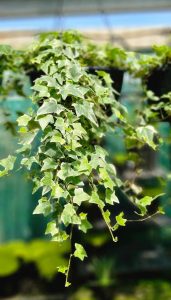
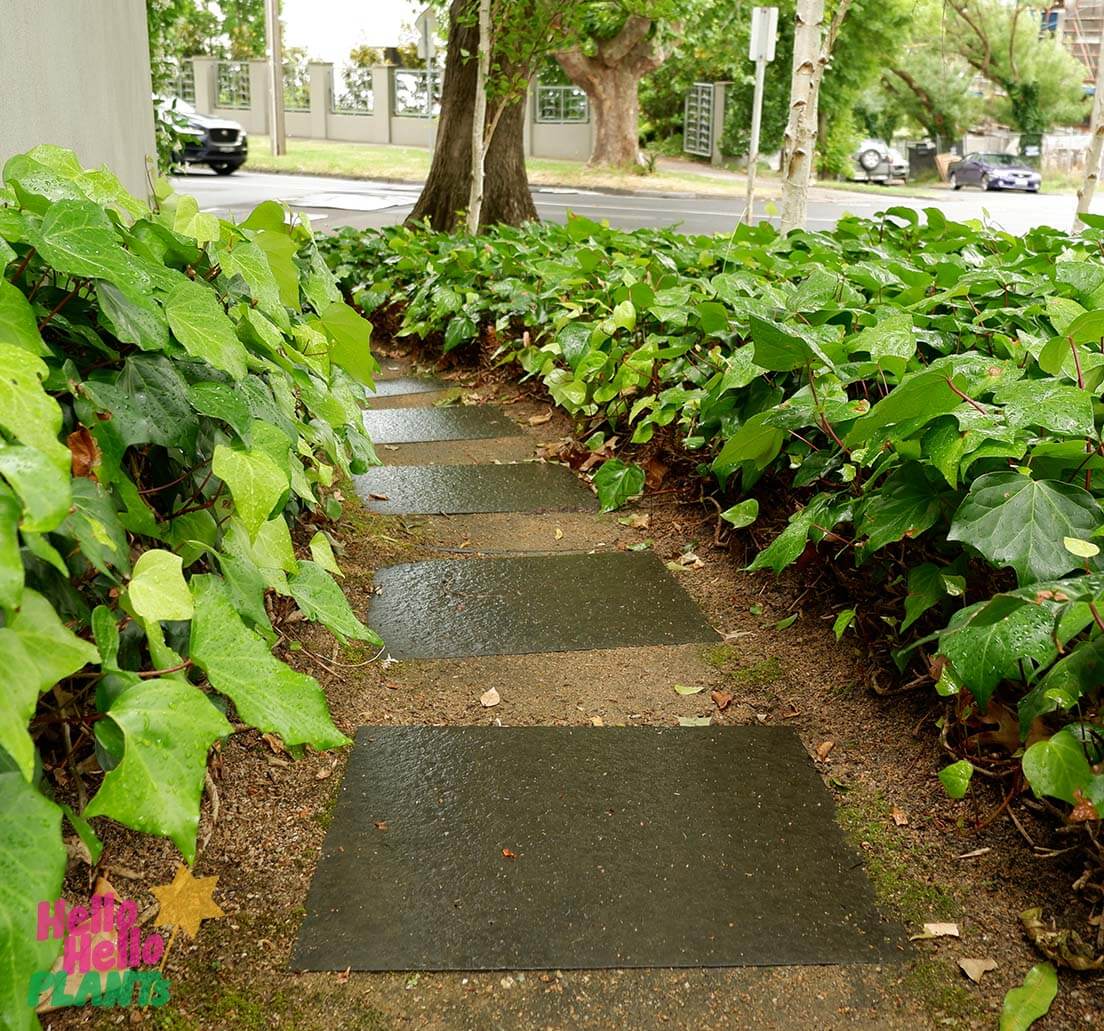
Hedera are the plant family commonly known as ‘Ivy’. They are chosen for their versatility and elegant foliage. They feature broad, palmate green leaves. Palmate means leaves with lobes that stick out from a central point, like the fingers on a hand. In ivy’s case, their leaves have 3 prongs.
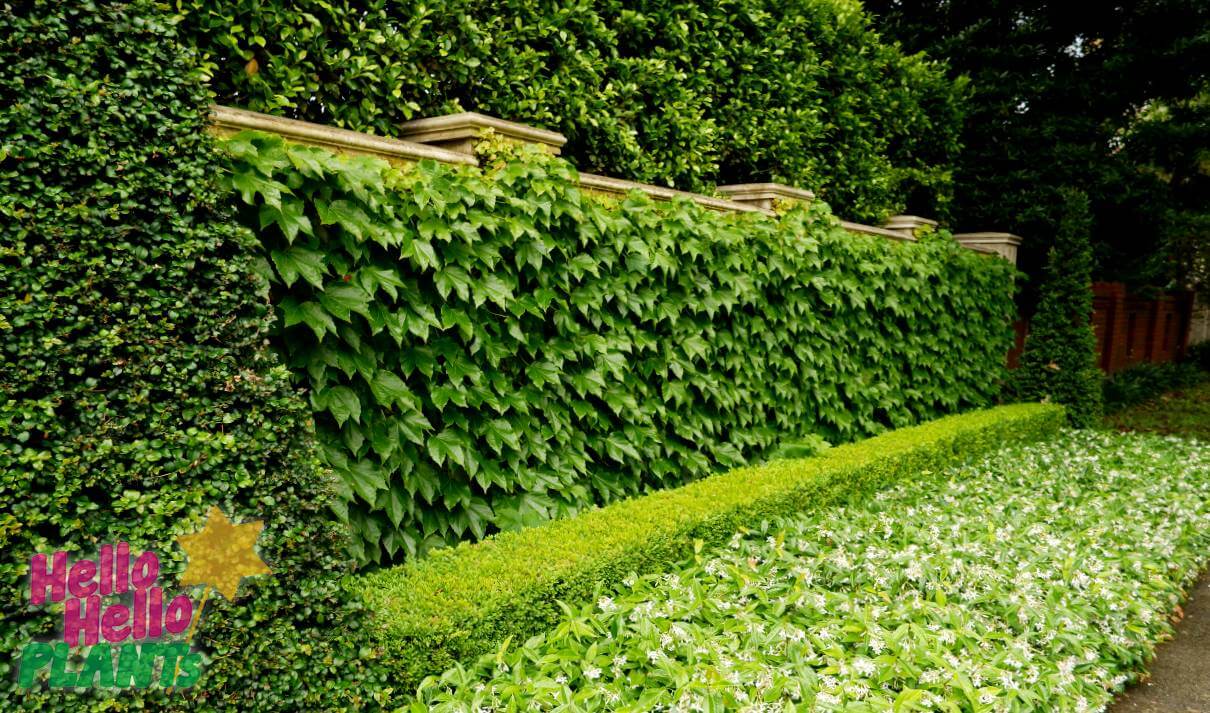
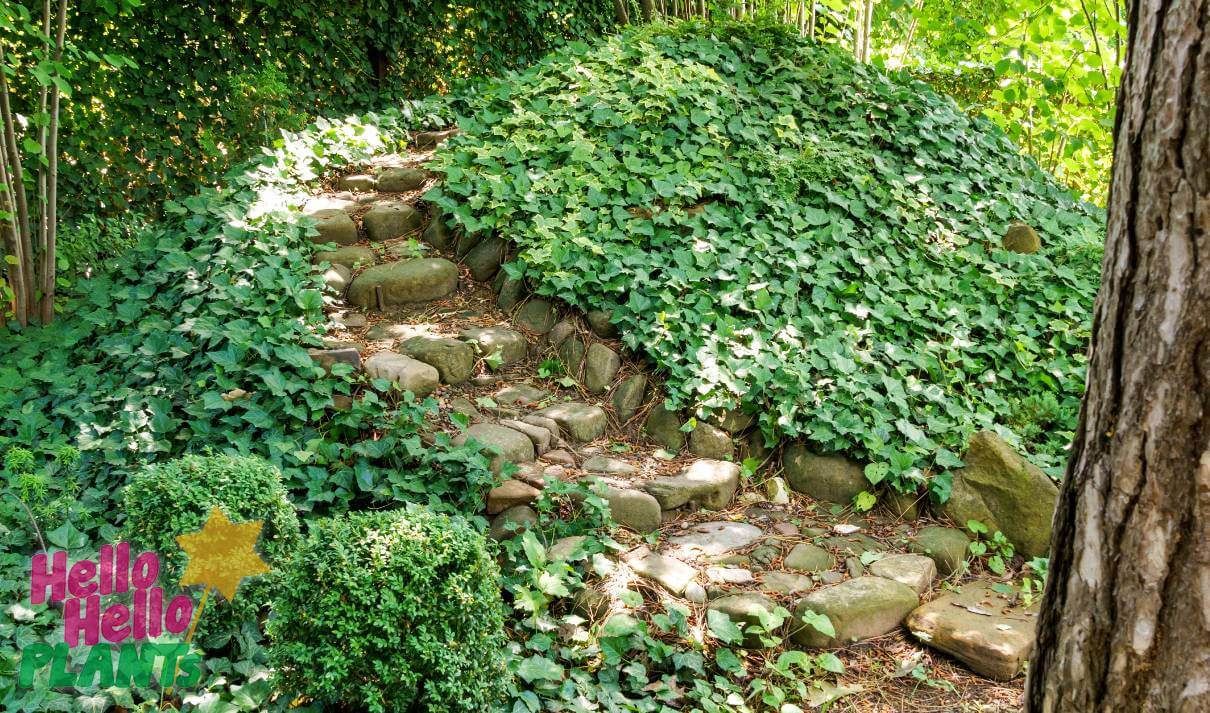
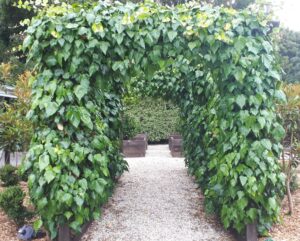
Ivy plants are creepers and climbers that are quick to cover whatever surface they are grown over. As Hedera are evergreen, they create very little mess, keeping a lush green look year round as a groundcover, wall covering or coverage for an archway.
Different types of ivy plants are often used as a lawn substitute as they outcompete weeds once established, grow to an even height and will grow in shaded areas where grass can’t. As a substitute hedge, Ivy covers the trellis or fence completely and evenly. Gardeners have even been known to create wall art using this vigorous climber, indoors and out! As they not only tolerate full sun but also full shade, hedera ivy plants were once the most popular indoor plant, grown in hanging baskets and trailing over bookcases,
These formal looking climbers can grow anywhere and almost on anything, so to keep them looking their best they will require regular trimming and training, particularly in the warmer months. If unchecked, Ivy is known to climb high up into a tree that is growing nearby and completely smother it! Or over your side of the fence AND the neighbours. So ivy is not for the zero maintenance garden by any means, but should not be discounted as a gorgeous garden feature.
In some regions, some varieties of Hedera are considered noxious weeds, so be sure to check with your local council as to what you can plant.
Plant Type: Climber
Uses: Groundcover, Climber, Archyway, Arbour, Wall Covering, Green Wall Art
Garden Types: Formal, Cottage, Hampton, Woodland, Lush & Leafy, Pots & Containers, Indoor, Poolside, Courtyard

Ivy (Hedera) Plant Care
Sun Requirements: Ivy thrives in full sun or part shade position.
Water Requirements: In hot climates, make sure an ivy is watered daily to maintain lush foliage, otherwise is self sufficient once established
Soil Requirements: Ivy tolerates most soil types including clay and sand. Prefers moist, well-drained loamy soil.
Fertilizing: Use an all purpose fertiliser such as Charlie Carp All Purpose or Osmocote Total All Purpose for ivy, during the spring and throughout the warmer months.
Pruning: Prune ivy when required. Hedera grows vigorously during the warmer months and in full sun so a monthly trim may be required.
Tolerances: Ivy tolerates drought, frost, poor soils and pollution.
Pests & Diseases: Mealy Bugs, Aphids, Whiteflies
Hedera Key Features
| 🌿 Classic evergreen climber with dense, dark green lobed foliage |
| 🧱 Self-clinging aerial roots climb walls, fences, trees and supports |
| 🌱 Excellent shady groundcover and underplanting solution |
| ☁️ Thrives in full shade to part sun and adapts to varied soils |
| ❄️ Hardy, long-lived and tolerates cold winters and urban pollution |
| 🪴 Suitable for pots, baskets, topiary shaping and indoor décor |
| ⏱️ Fast-growing cover; trails or climbs several metres with support |
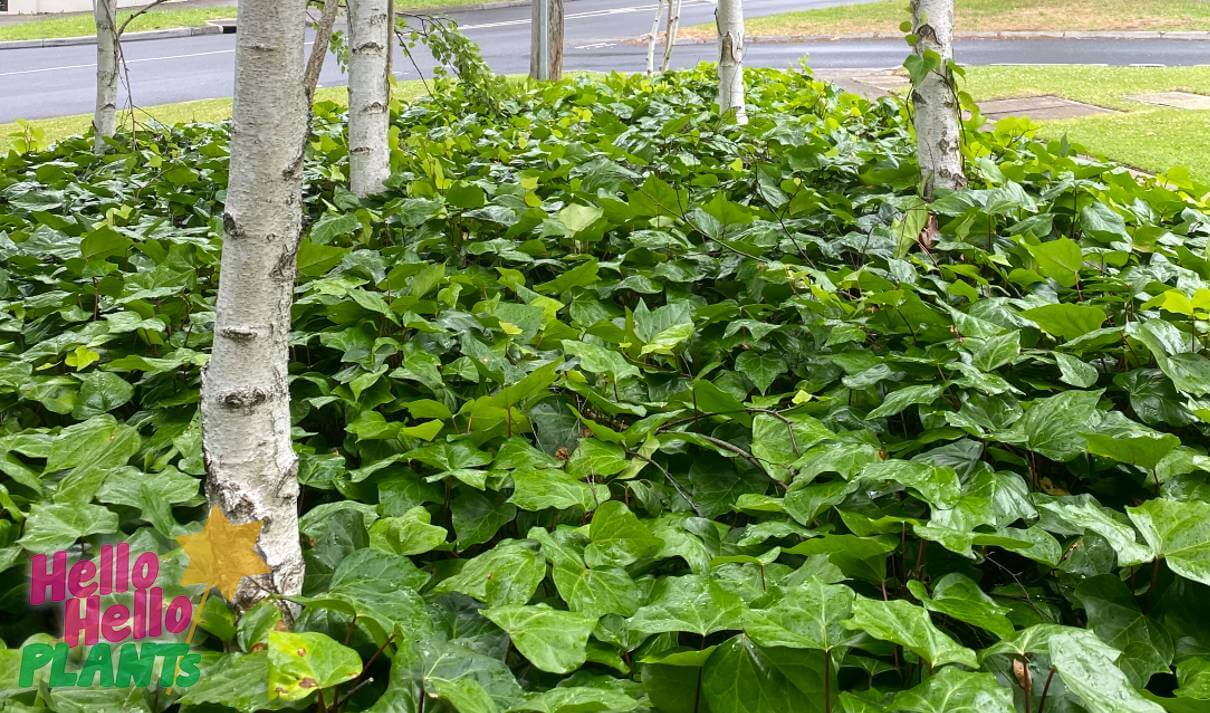
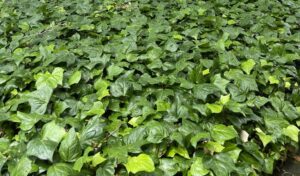
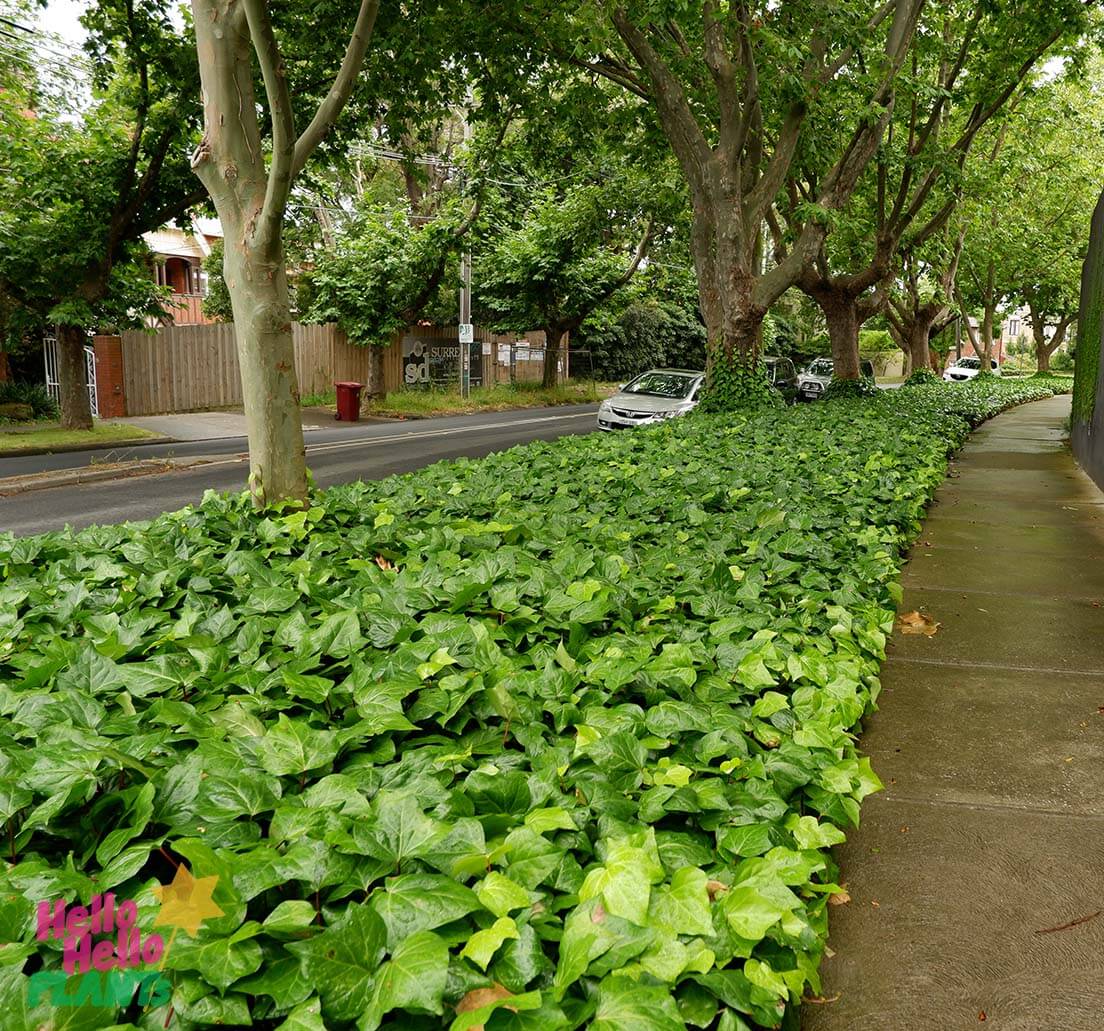
Hello Hello! I love mass plantings of Canary Island Ivy or ‘Canary Island Ivy lawns’, as they are commonly called. The best thing about them is the large luscious foliage. With the new growth being light green and the old growth being a deep green, it reminds me of the lovely dappled effect you see in ‘Monet’ paintings.
Canary Island Ivy lawns are a dramatic way to cover a nature strip or a small expanse, as they look amazing.
When planted over a large expanse, you can dress up your ‘Ivy lawn’ by interplanting with trees such as Silver Birch or Japanese maple, an arrangement of box balls, or other topiary. These provide a beautiful feature in a Canary Island Ivy lawn.
Canary Ivy lawns are cheap and easy to establish. Plant 1 per meter or 2 per meter if you are in a hurry, and keep them well watered until established. Water and fertilize regularly to get fast cover.
Once you have a complete cover, they become one of the lowest maintenance landscapes available as they blanket out weeds, they have a very low water requirement, and you only have to trim around the edges with a brush cutter to stop them spreading onto paths etc. Try not to let them climb over trees.