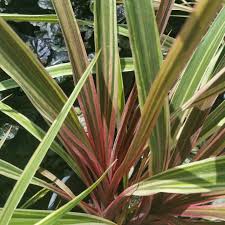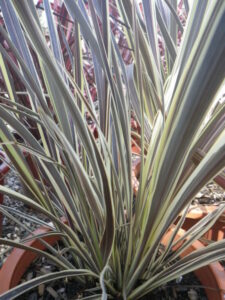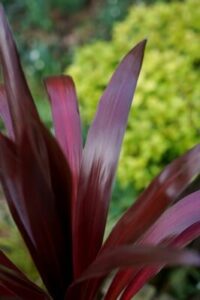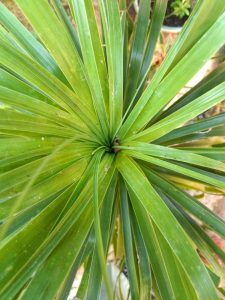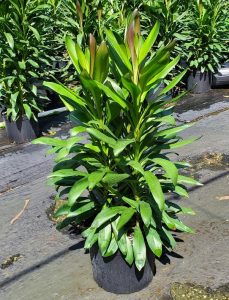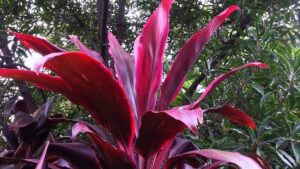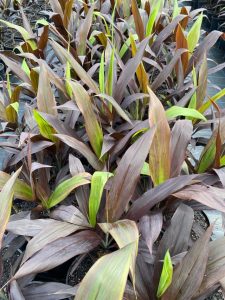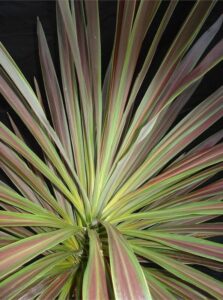

- Fast growing
- Range of colourful evergreen foliage
- Hardy and low maintenance
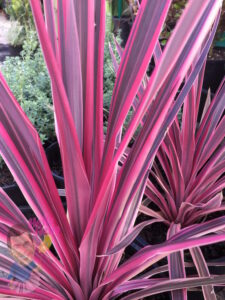
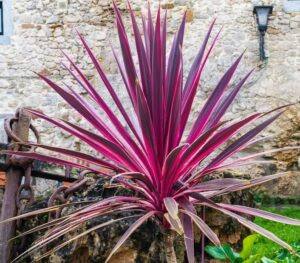
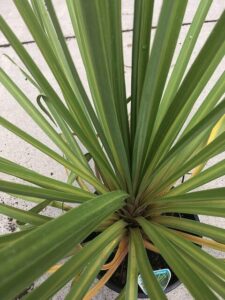
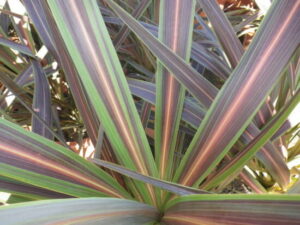
A common request when designing gardens is colour. How can I add colour to my garden amongst all that green? Well Cordyline is your answer!
Cordylines are one of the most popular plants to add to the garden as they come in a range of colours, are fast growing and will grow in a wide range of soil types and weather conditions.
The Two Main Types of Cordyline
There are two main types of Cordyline, each with its own distinctive look and growing preferences.
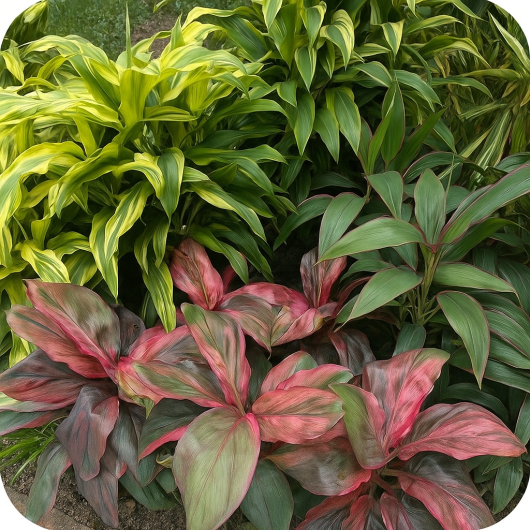
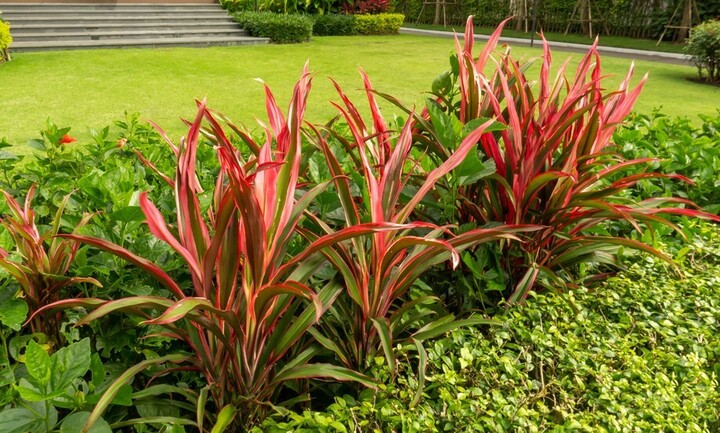
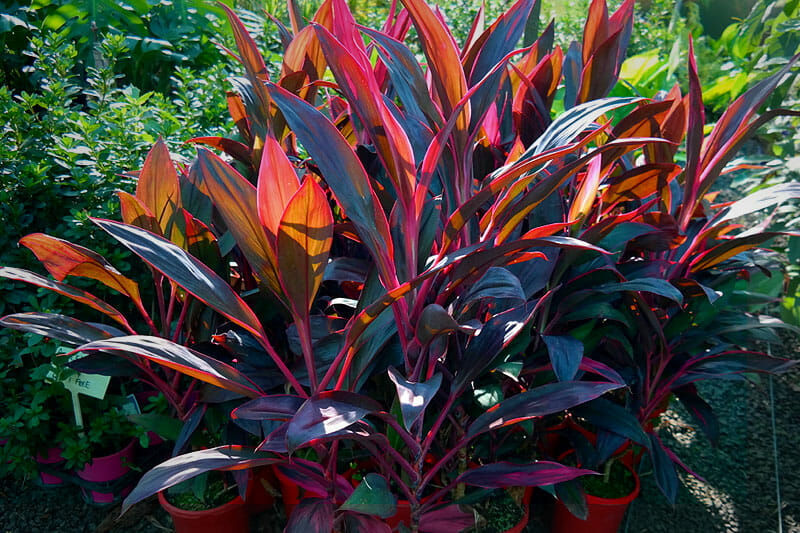
Cordyline fruticosa prefers a more sheltered position, such as indoors or in a protected garden spot. It has broader, lush leaves and a more tropical appearance, making it a great choice for adding bold colour and softness to shaded or indoor areas.
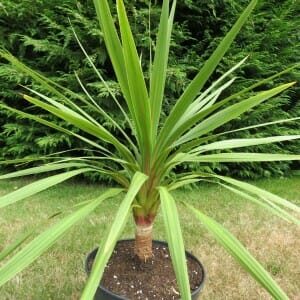
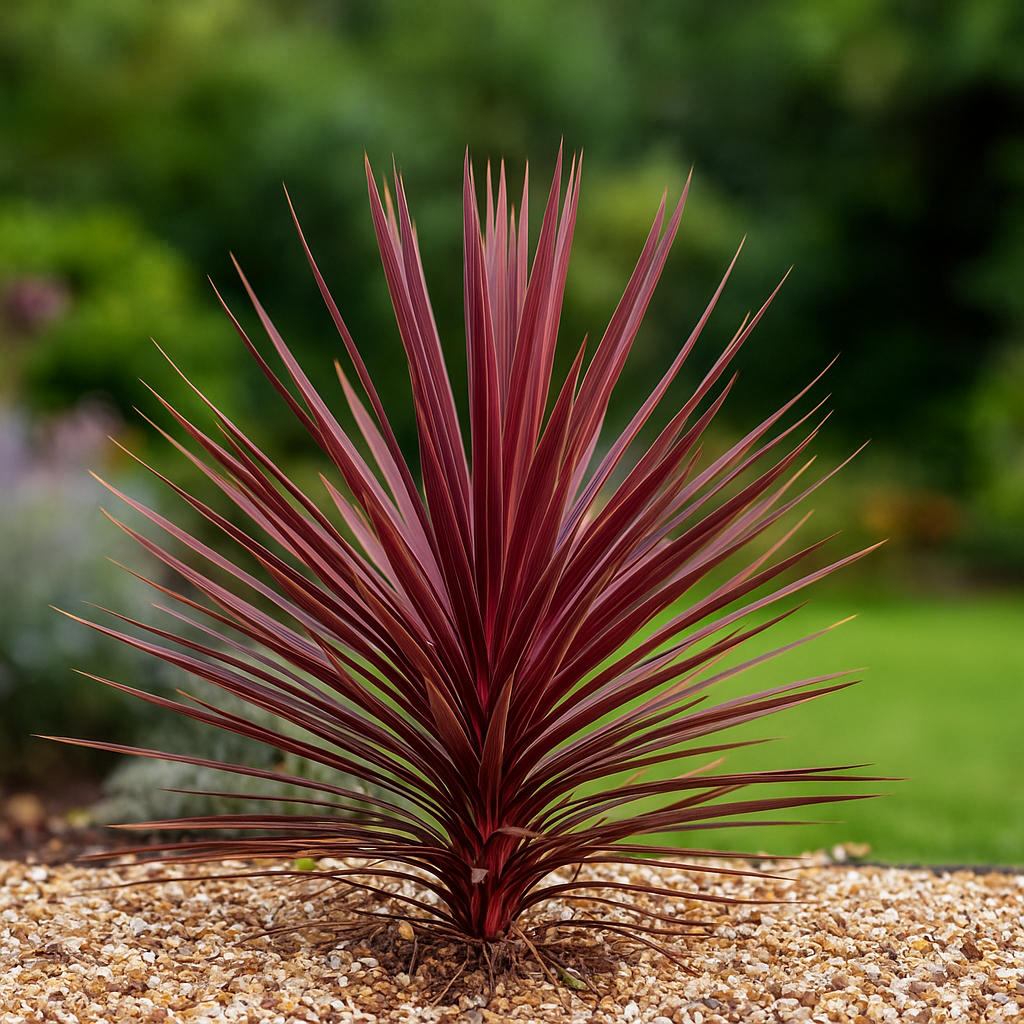
Cordyline australis, on the other hand, is hardier and can handle full sun to part shade. It has thinner, grass-like leaves and a more architectural shape, often used in landscapes to create height and structure.
There’s also another plant that is often mistaken for a Cordyline — the Dracaena. While it looks quite similar, it belongs to a different plant group altogether. Dracaenas share the same striking, upright foliage and tropical look, but they are not true Cordylines.
Cordyline fruticosa
Often used indoors or amongst built-up, tropical style gardens are the Cordyline fruticosa or ‘Ti’ plant. Native to New Zealand, Papua New Guinea and the Pacific Islands, this beautifully colourful and lush plant suits most semi-sheltered and indoor settings.
These lush and leafy plants grow anywhere between 1.5-3m tall and straight up! Often only spanning a maximum of 60-80cm per trunk.
Although they can be grown outside, they often suffer in midday to full afternoon summer sun in Melbourne. The sun is just too harsh! Cordyline fruticosa prefer dappled shade or only a few hours of sun outside, whereas when inside they like a well lit or sunny position.
They grow best with a bit of humidity so if indoors, put them near the humidifier! Outdoors, they grow best planted amongst other lush plants. Water 2-3 times a week in summer and once a week during winter if outdoors. Fertilise every month with a slow release fertiliser and, to boost colour, you can add a little potash
Garden Types
- Tropical
- Indoor
- Pots and Containers
- Lush and Leafy
- Poolside
Cordyline australis
Unlike its more sensitive relative, Cordyline australis can grow almost anywhere. The ‘Cabbage Palm’ is native to New Zealand and grows in almost any soil type and position.
There are many new varieties of Cordyline, growing anywhere from 1.5m up to 4m dependent on the variety. And, just like a palm, they generally grow straight up, taking up minimal space. But, if a multi-trunked Cordyline is your preference, a quick trim of the top will encourage more growth from the base of the trunk. This method can create a gorgeous multi-trunked Cordyline sculpture as a feature. Or, if you prefer then nice and straight, trim off any trunks that may appear.
As mentioned before, Cordyline australis will grow in almost any soil, excluding boggy, water-logged soil. They prosper with a regular watering, roughly 2-3 times a week during summer and once a fortnight in winter, unless very dry.
To enhance colour, fertilise with a potassium rich fertiliser in spring an autumn.
Garden Types
- Tropical
- Modern
- Pots and Containers
- Low Maintenance
- Rock Garden
- Poolside
Available Cordylines
Mix different varieties to create layers of colour and contrast, or combine them with ferns, grasses, and flowering plants for a garden that truly comes alive. From modern landscapes to classic cottage gardens, Cordylines blend beautifully into every setting — proving that a little colour can completely transform your outdoor space.
Let your garden shine with the incredible colours and textures of Cordylines — nature’s way of painting with leaves.