


First discovered centuries ago in the lush hills of Japan and China, Hydrangeas have long been treasured for their graceful beauty and adaptability. Few garden plants capture the heart quite like Hydrangeas. With their generous, globe-shaped flower clusters and old-fashioned charm, they’ve become icons of cottage gardens and modern landscapes alike. Whether you love the soft blues and pinks of traditional varieties or the crisp whites of newer hybrids, Hydrangeas always bring a sense of romance and abundance to any garden.
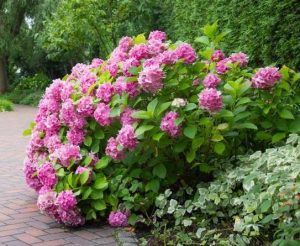
One of the most amazing things about Hydrangeas is how their flower colour can change naturally depending on the soil they’re planted in.
This happens because the plant absorbs aluminium from the soil differently depending on the pH level — the more acidic the soil, the more aluminium it takes up, giving the petals a beautiful blue tone.
You can even adjust the colour yourself:
Add a little garden lime to make the flowers pink.Use aluminium sulfate or acidic mulch (like pine needles) to make them blue.
It’s like nature’s own chemistry experiment happening right in your garden — your Hydrangea becomes a living pH indicator!
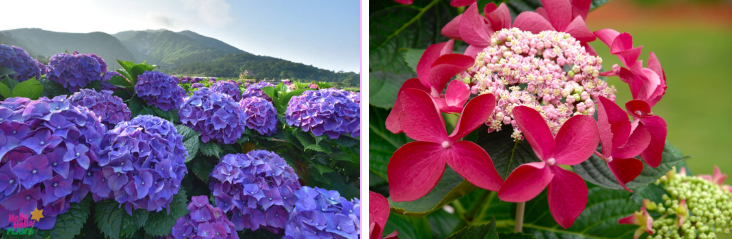
🌸 Long-Lasting and Ever-Changing
Hydrangeas bloom from spring through summer, and their flowers often dry beautifully into autumn tones of antique green, cream, and bronze. Even after the petals fade, the dried blooms add texture and interest to the garden — and they make stunning dried arrangements indoors.
🌿 Perfect for Every Space
Hydrangeas thrive in well-drained, moisture-retentive soil and love a mix of sun and shade.
In cooler climates, they adore full sun.
In warmer spots, they appreciate afternoon shade.
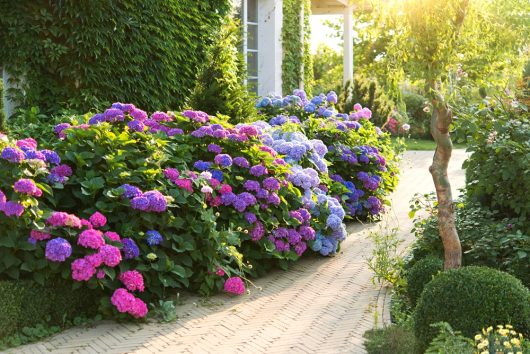
From compact dwarf forms perfect for pots to big garden shrubs, there’s a Hydrangea for every space and style.
Easy Care for Big Rewards
Water regularly: Hydrangeas prefer consistent moisture, especially during hot spells.
Mulch yearly: Keeps roots cool and soil rich.
Prune wisely: Some varieties flower on old wood (like Hydrangea macrophylla), while others bloom on new wood (Hydrangea paniculata). Knowing which type you have helps keep flowers coming every year.
Popular Hydrangea Varieties and Their Differences
| Variety | Flower Form | Typical Colours | Key Features |
|---|---|---|---|
| Hydrangea macrophylla (Bigleaf / Mophead) |
Large round clusters of full blooms | Blue, pink, or purple (changes with soil pH) | Classic garden favourite; thrives in partial shade; colour shifts with soil acidity |
| Hydrangea paniculata (Panicled Hydrangea) |
Elongated cone-shaped flower heads | White, cream, lime-green, turning pink with age | Sun-loving; very hardy; blooms on new wood; perfect for full-sun spots |
| Hydrangea quercifolia (Oakleaf Hydrangea) |
Large clusters with oak-shaped leaves | White to soft pink | Distinctive leaves with brilliant autumn colour; prefers well-drained soil |
| Hydrangea arborescens (Smooth Hydrangea) |
Rounded clusters, slightly flatter than mophead | White or pale green | Extremely cold-hardy; easy to grow; famous variety: ‘Annabelle’ |
| Hydrangea serrata (Mountain Hydrangea) |
Flat-topped lacecap blooms | Blue or pink (changes with pH) | Compact size ideal for smaller gardens or pots; thrives in cooler climates |