icon
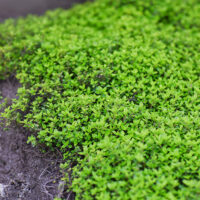
An advert for Nature's Carpets Sale featuring a close-up of green moss, text about carpets that grow, and a "Click Here" button with images of plants used as ground cover.
Chris’s Guide to Nature’s Carpets: The Ultimate Groundcover Tour
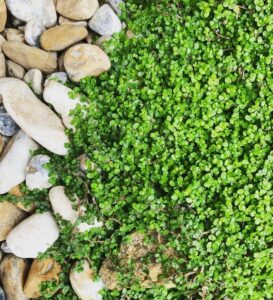
Thymus serpyllum White Creeping Thyme
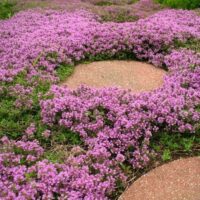
Pink Creeping Thyme
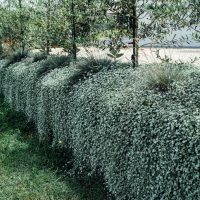
A row of dense hedges with small white flowers is lined with young fruit trees, adding a touch of orchard charm beside the grassy area.

We've put together a range of plants that come under the banner of Nature’s Carpets — beautiful, super low-growing plants that spread across the ground. You can use them to make a small lawn, a colourful patch in the garden, or grow them in pots and let them cascade over the sides. 

We've got all sorts: ones for full sun, ones for sun or shade, ones for deep shade, ones that flower in different colours. There really is something for everyone — some take foot traffic, some don’t. 

I’m going to run you through the range and tell you what each one is good for.

👆 Check out our Nature's Carpet Sale live video above
Dichondra Repens

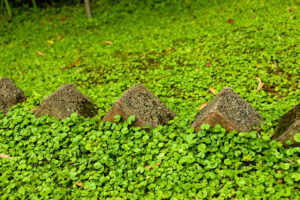
Dichondra, which is properly called Dichondra repens, or Kidney Weed, is another common name for it. This is a lush green plant that spreads over the ground very, very quickly and grows in deep shade through to hot sun. It needs a little bit of water, good soil, a little bit of fertilizer, and it loves the warm weather — it really grows like crazy in the warm weather. 

People plant it around planters, they make it into lawns, and you can make it a nice lush green ground cover. It’ll take a bit of light foot traffic, and looks great around your pavers. It’s great where you have a situation with both shade and sun, and it’ll do well in both the sun and the shade. Easy and fast growing — that’s your Dichondra. 

Dichondra Silver Falls

Silver Dichondra is one of the most popular of all our Nature’s Carpets. It can cover a very large area. It’s quite fast growing, particularly in the hot weather, and it can cover a very large area and make it a beautiful silver. 

It’ll cascade over a retaining wall. Lots of people plant it in pots for a bit of silver, and with a nice dark pot, it’ll cascade over the side and give a beautiful cascade down the side of the dark pot or over the side of a retaining wall. Or if you’ve got an ugly retaining wall, you can use it to cover the retaining wall. 

Give it plenty of fertilizer and plenty of water in the hot sun, and it grows like crazy. It’s amazing how fast it grows in the summer.

White Thyme (White Creeping Thyme)

White Thyme is an actual edible thyme — you could put it on your pizza; you could use it in your cooking. When you run your hand over it or run your foot over it, it gives off a beautiful fragrance — a lovely, sensuous fragrance. 

It starts flowering in November, and it flowers like mad right through to the end of March. You get months and months of beautiful white flowers and lovely fragrance. When it’s not flowering, it has a really pretty green, mossy look — it looks like a beautiful green moss. It comes out, and you could use that. 

It takes light foot traffic. It takes full hot sun. You wouldn’t plant it in really deep shade, but it’ll take a little bit of light shade — light shade right through to full hot sun. It loves good soil, loves a bit of water, loves a bit of fertilizer, and of the Nature’s Carpets, it would be one of the best to make a large lawn area with because it’s quite hardy, reliable, and very long-lived. 

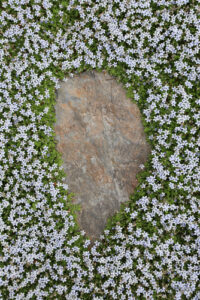
White Pratia (White Star Creeper)

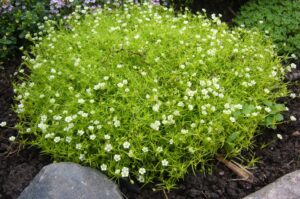
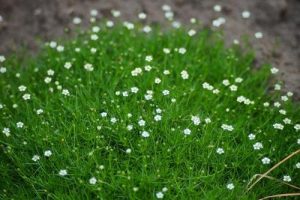
White Pratia is like a beautiful, fine green moss that has these starry little white flowers that emerge in late September or early October, and they become more and more prevalent as you go through the heat of summer.

They stop flowering around the end of May or the beginning of June. You get months and months of these lovely little starry white flowers over a lovely green moss. These will take light foot traffic. They’ll grow in hot sun or full shade.

They need good water and fertilizer and are quite good to make a small lawn or to put around pavers, which is very popular, or you can plant them in the bottom of a pot. You may have a lovely flowering green moss in a pot, even in a hanging basket.

They’re really pot-like in the garden as a large mossy lawn with lovely white flowers. Fabulous. 


Blue Pratia (Blue Star Creeper)

Blue Pratia is exactly the same as your White Pratia.

You can do all the same things with it, but it's a beautiful pastel blue — a really lovely pastel blue.

Use it for all the same applications as your White Pratia, but in a beautiful pastel blue. 

Beacon Silver

Now if you need something that grows like crazy, you’ve got Beacon Silver. Beacon Silver is great in deep shade, and it has lovely bright silvery foliage with nice purple flowers for quite a long time of the year. It’s really good for brightening up a dull, dark corner. It grows well in complete shade and will take a little bit of sun, but not too much. 

It’s very fast growing and grows fairly thick — no good for foot traffic — and it ends up perhaps nine to ten centimeters thick, so it's quite thick and bushy. It makes a great bright silver carpet for a deep shady corner. 

Lime Lava

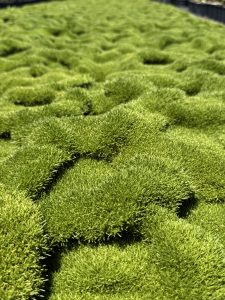
Lime Lava, or sometimes called Zen Moss, is a wonderful plant — probably the most popular of all Nature’s Carpets — and it has many uses. It's a sun lover, so if you’ve got a shady corner, don't grow it there. Lime Lava looks great on its own in a pot, cascading over the side, or planted in a pot with a beautiful Japanese maple or a nice black pine. It has lovely bumps and shapes, and it adds quite a bit of character. Other people plant whole lawns out of it — they plant large areas. 

With Lime Lava, you have to understand where it comes from. It comes from the tops of snowy mountains in Australia, where it grows in cracks between rocks with sandy gravel — beautifully well-drained — and lots of water flowing down those cracks. It loves a drink, and it loves nice loose soil and good drainage. If you plant a big plant into heavy clay, it's unlikely to do well. You need to really cultivate the soil and have loose soil with fabulous drainage, plenty of water, and plenty of fertilizer. 


That's your Lime Lava. It’s great for making a whole big area, and you can use it as a feature in your native garden or in your Japanese garden. It gives you that lovely mossy look in a Japanese or Zen garden, and it gives you that mossy look right in the sun better than any other plant in hot sun can do. 

Lime Lava creates a beautiful round, mound-like green mossy look. It's an interesting, friendly-looking little plant. We have it on display down the back of the nursery, and sometimes I go past and there’ll be a child standing there patting the Lime Lava and having a little relationship with it. It’s an interesting plant like that. 

Irish Moss (Lemon and Lime / Green)

Irish moss, correctly known as Sojourner, comes in a lovely lime-lemon colour, and with that, it’s a little bit more versatile. It’s a similar colour to the lime lava, but if you have a spot that’s a little bit shady or has heavier clay soils, it’s more versatile in terms of where you can put it compared to lime lava. It does have little tiny white flowers on it for part of the year. It’s very similar and you can use it as a nice splash of colour in a pot.

It’s great to pop into a bonsai tray with a bonsai, or have it growing over the side of a nice pot, putting it in a hanging basket, or growing it out in the garden or making a large ground cover. It’s fairly fast growing and you can cover a big area quickly by mass planting it, and it gives off a lovely golden hue. 

There’s also an Irish moss, or Sojourner, that’s dark green — and it’s a darker green than your lime lava. When you’re planting in a pot, you might plant a little bit of the lemon-lime and a little bit of the dark green, and they can look really nice in contrast.

They’re the same texture, same finish, but a lovely contrast to each other. Really good for pots, great for the garden, and great for mass planting. It’s not good for foot traffic.

Like the lime lava, plant your Nature’s Carpets somewhere where you’re not going to walk on it if you’re using lime lava or Irish moss.

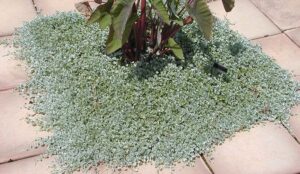
Dymondia (Silver Carpet)

Dymondia is quite an unusual one, and what's great about it is that it's very, very flat, can take quite a bit of foot traffic, and is great to put around pavers. It’s particularly good to put around dark pavers; silver-grey, like a cement paver, doesn’t look so good with it. You need to have a nice dark-coloured stone or paver near it to set it off — it’s a true silver-grey — very low and very flat. 

One of the things I’ve used it for is when customers worry about snakes hiding in their garden. Dymondia is so flat and tight that I defy a snake to get under it or in it. A snake crossing your Dymondia is going to be fully exposed. I’ve done a large landscape where the property was quite snake-infested. I featured trees with trunks and Dymondia growing in mounds so they could spot any snakes coming up toward the house. 

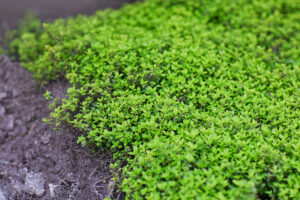
Baby’s Tears

Baby’s Tears is a beautiful, soft, moss-like Nature’s Carpets, and it comes in a nice medium green or a bright yellow. It’s a wonderful thing to put in the bottom of a pot; it has to be in the shade — it hates the sun. If you’ve got a beautiful fern in a pot and you want a little plant underneath it, choose whichever colour will contrast nicely. You can use the yellow or the green, and you can plant it in the pot or plant it in your fernery. If you’ve got a part of the garden where the sun never shines and it’s brown and bare and terrible-looking, plant your Baby’s Tears there. 

If you plant multiple of them, they’ll very quickly give you a whole lawn of Baby’s Tears. It doesn’t take much foot traffic, so if you wanted to walk through your lawn of Baby’s Tears, you’d put some steppers — some concrete or stone steppers — there so you can walk on those and not walk too much on the Baby’s Tears. It’ll take a tiny bit of traffic but not too much. Baby’s Tears has a lovely soft mossy look, beautiful colour, and is great with ferns and great in the shade. Plant it as a lawn or grow it in a pot. It even looks great in a hanging basket, and it will cascade over the side just a little bit.

.

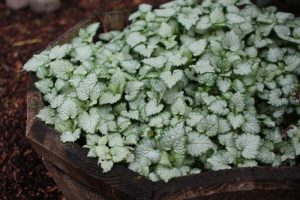
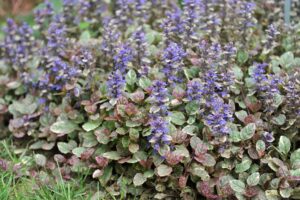
Ajuga Burgundy Glow

Ajuga ‘Burgundy Glow’ is interesting — it’s the most colourful of the Ajugas. On the foliage it has a mauve colour, a silvery-mauve colour, and it has pink and white, so you’ve got three different colours on the foliage, and then you’ve got a beautiful blue flower. Blue flowers with tricolour foliage. 

Ajugas generally don’t like full sun, but Ajuga ‘Burgundy Glow’ appears to be the most sun-hardy of all the Ajugas. It’s a beautiful sun-hardy, fast-growing ground cover. I often plant these under hydrangeas because when your hydrangea loses its leaves, the garden can end up looking bare, and you can slip your Ajugas underneath and have colour and foliage when the hydrangeas are bare.

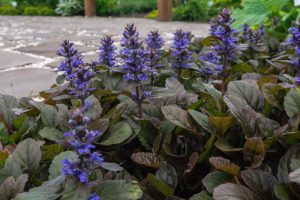
Ajuga Purple (Bugleweed Purple)

Ajuga Purple is a real shade lover. A lot of plants with purple or red foliage lose their colour when you put them in a shady corner, but Ajuga ‘Purple’ keeps a beautiful rich purple when it’s growing in the shade.

It loves the shade and is a great way to get colour into a darker area. 

Maybe you’re planting something like Lambs Ears and it’s all silver, and you want something low and purple to support it and set it off. Ajuga Purple works really well for that.

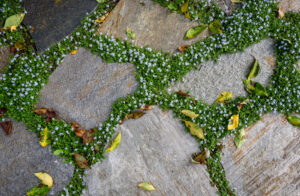
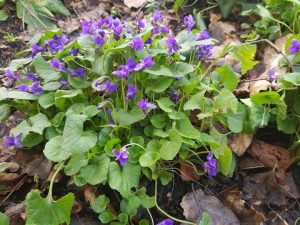
Native Violet

Native Violet will take a little bit of morning sun or a little bit of light sun. It doesn't like full hot sun — it loves the shade — and it will grow in the shadiest, no-direct-sun situations. Give it a little bit of water and fertilizer and it spreads like crazy. It can create a lawn, it can cover a large area, and people put it around their pavers. 

What I love about Native Violet is that it has beautiful, cute little purple-and-white violet flowers. Those flowers bloom for most of the year, so you’ve got lovely blue-and-white flowers and beautiful fine foliage. It looks a bit like Dichondra in the foliage, but you can always tell it apart because it has lots of little flowers through it. 

Use it as a lawn, use it as a carpet, grow it in a pot. It makes a beautiful mound and cascades over the side of the pot or a hanging basket. Grow it as an underplanting in the garden to get a bit of green underneath your trees or in your shady areas. It will take over and drown out most weeds — it’s quite an aggressive spreader.

Southern Woodland Violet

Woodland Violet is more sun-hardy than the Native Violet — just as vigorous — and it spreads like crazy. The leaves are a beautiful purple colour and the flower is much more showy than the Native Violet. 

You wouldn’t put it in the hottest, sunniest spot or a terribly exposed spot, but it will handle a reasonable amount of sun right through to deep shade. It likes a bit of water and a bit of fertilizer. It has beautiful purple foliage with lovely blue flowers and makes a nice low spreading ground cover. It’s not great for foot traffic, so you wouldn’t use it for that. It also looks fabulous in a hanging basket or a pot. It’s a beautiful pot plant or hanging-basket plant and a nice addition in the front of a border or something like that in your cottage garden. Woodland Violet — another one of the beautiful Nature’s Carpets.

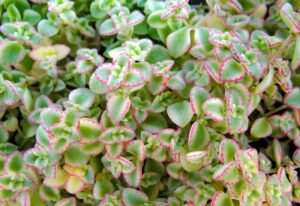
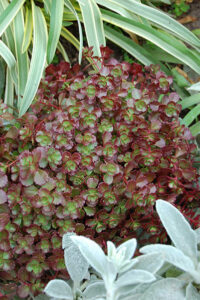
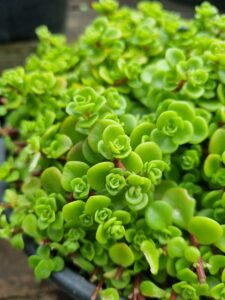
Sedum Blob (in variety colours)

Then you've got your Blobs. Blobs are really interesting because they're a sedum — and a sedum is a type of succulent — and they grow in a beautiful carpet, and they don't need too much water. You can have them in a pot and forget to water them for a couple of weeks; water them when you feel like it. 

They're really colourful, they're very, very flat, and they've got vibrant colours in them. You can use them, for instance, if you’ve put a large succulent in a pot — something that doesn't need to be watered all the time — and you want an underplanting. You wouldn't want to put something that needs lots of water, like a Silver Dichondra or something like that. You could consider putting a blob underneath. 

Blobs are easier to grow and quite cold-hardy. A lot of succulents can’t take frost, but most blobs will take quite a bit of cold, heat, and dry. To get fast growth, you do your best to water them and fertilize them, perhaps with a bit of Osmocote. 

The blobs come in different colours. They come in a beautiful bright silver, which is very popular; a lovely fine bright gold or yellow; and a chocolate colour, a nice rich brownie-reddy colour. One of my favourites is the green one. The green one is particularly nice because when you plant it in a pot under a nice plant — I often plant them with cordylines or coprosmas or something like that — and I’ve got lots of colour in my foliage, then I think something like the green earth tone, so I’ll use the green blob and plant it in the pot underneath the other plant. 

What I love about the green blob is that it grows quickly and then cascades beautifully over the side — a lovely cascading one. The only other one is a purple blob, which is a lovely deep silvery purpley colour. 

They’re all your different blobs. They're great to put in pots, great in a hanging basket, and great for bringing colour into the garden. They work really well with succulents and agaves and other things you can keep fairly dry. They can also be used in a cottage garden or other types of gardens to get a splash of colour. The blobs are one of the best of the Nature’s Carpets to get colour into a pot or a garden bed because you have lots of nice colours in the foliage.  

🌿 Why Choose Groundcover Plants?

  • 🌱 Naturally suppress weeds and reduce maintenance
  • 💧 Retain moisture and prevent soil erosion
  • 🌸 Create a lush, carpet-like garden look
  • ☀️ Thrive in sun, shade, or dry conditions
  • 🐝 Boost soil health and attract pollinators
  • 🎨 Add year-round colour and texture

Well, that’s our quick tour of Nature’s Carpets — beautiful colours, lovely textures, and something for every corner of the garden. They’re easy, they’re tough, and they really bring a space to life.

If you’d like to see them for yourself, come on down to Hello Hello Plants and have a look- or order your own Nature’s Carpets on our website — we’ll get it sent straight out to you. They really are a wonderful way to bring your garden to life.

Select the fields to be shown. Others will be hidden. Drag and drop to rearrange the order.
  • Image
  • SKU
  • Rating
  • Price
  • Stock
  • Availability
  • Add to cart
  • Description
  • Content
  • Weight
  • Dimensions
  • Additional information
Click outside to hide the comparison bar
Compare