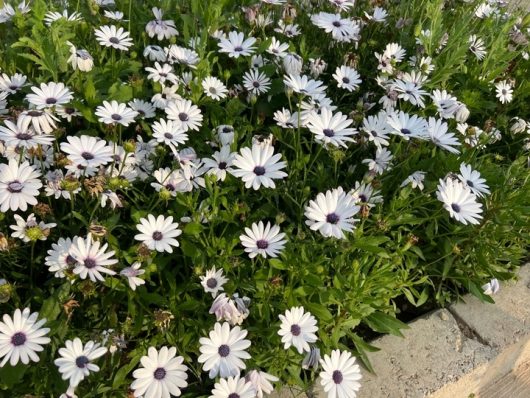
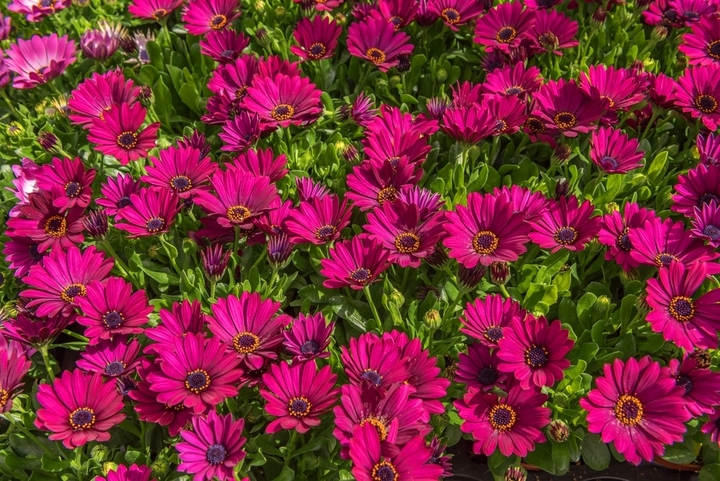
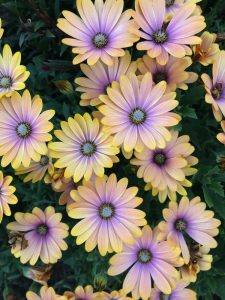
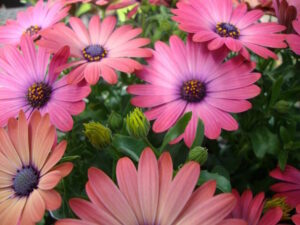
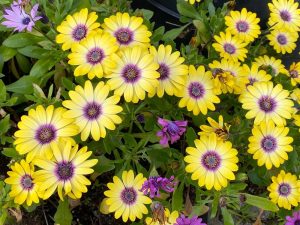
Osteospermum commonly known as the African Daisy originates from the southern regions of Africa, where it thrives in warm, dry conditions and poor soils.
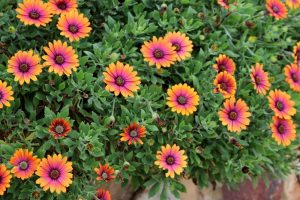
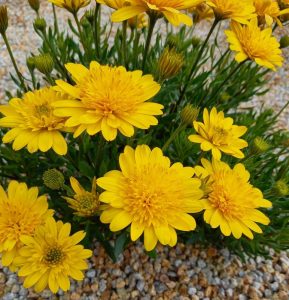
Osteospermum brings a burst of colour and cheer wherever it’s planted. These radiant blooms open with the morning sun, showing off vivid shades of purple, pink, orange, yellow, and white, and then gently close at night or on cloudy days, a charming rhythm that feels alive in every garden.

African Daisies are true showstoppers. Each bloom features a vibrant ring of petals radiating from a striking centre, often metallic blue or deep purple,creating a bold, eye-catching contrast. Some modern varieties have spoon-shaped petals that give the flowers a sculptural, almost futuristic look.
They grow as compact bushes, typically between 25–45 cm tall and about 30–50 cm wide, forming a neat mound covered in blooms from spring through to autumn. In frost-free areas, they can even flower all year round.
🌞 Growing Conditions and Sunlight
Osteospermums are plants that love the sun — they need at least 6 hours of sunlight daily to produce their best display. In cooler climates, full sun is ideal, while in very hot or inland areas, a little afternoon shade helps prevent stress.
They thrive in well-drained soil and don’t mind if it’s sandy or a little poor — in fact, overly rich soil can reduce flowering. Once established, they become incredibly drought-tolerant, making them perfect for low-maintenance and coastal gardens.
💧 Watering and Feeding
When newly planted, African Daisies should be watered regularly until their roots settle. After that, they only need occasional watering, as they prefer soil that dries out slightly between drinks. Overwatering is one of the few things they dislike.
A light feed every few weeks during the flowering season will keep them blooming continuously. Deadheading, removing old flowers, encourages new buds and keeps the plant looking fresh. If the plant becomes leggy after a long season, a light trim will quickly encourage compact, bushy growth again.
🌼 Climate, Hardiness & Uses
In cooler regions, Osteospermums are usually grown as annuals, but in warmer coastal or Mediterranean areas, they can live for many years as perennials. They cope well with windy and coastal conditions and are ideal for borders, rock gardens, hanging baskets, or patio pots.
Because of their tidy shape and long-lasting blooms, they’re also perfect for mass planting, where they create a sea of colour that lasts all season.
🌸 Popular Osteospermum Series and Their Key Features
| Series / Type | Flower Colours | Key Features |
|---|---|---|
| 3D Series | White, purple, pink, lavender, and bicolours | Unique double-centred blooms that stay open day and night; long-lasting colour display and excellent in pots. |
| Serenity Series | Soft pinks, purples, whites, and blues | Compact, tidy growth; abundant flowering with a refined shape — ideal for containers and edging. |
| Voltage Series | Bright yellows, oranges, and golds | One of the earliest series to bloom in spring; vigorous and sun-loving; thrives in garden beds or hanging baskets. |
| Astra Series | Violet, magenta, white, and deep purple tones | Bold, high-impact colour with strong stems; well-suited for landscaping and high-sun positions. |
| Sunny Series | Pastel yellows, creams, and two-tones | Heat-tolerant and extremely floriferous; maintains colour even in strong sun; great for warm climates. |
| Margarita Series | White, rose, lavender, and bronze | Large classic daisy blooms; perfect for mass planting and continuous summer colour. |
| Tradewinds Series | Mixed shades from pale to vivid tones | Hardy and weather-resistant; excellent for windy or coastal positions; ideal for garden borders. |
🌿 Why Gardeners Love Them
The secret behind Osteospermum’s popularity is simple, they’re easy to grow, stunning to look at, and full of personality. Their ability to thrive in dry, sunny spots makes them a favourite for busy gardeners or anyone wanting vibrant colour without constant maintenance. Whether you’re filling garden beds, brightening up a balcony, or decorating a coastal garden, these resilient daisies deliver beauty from the first warm days of spring until well into autumn.